
 English
 中文简体



START A PROJECT WITH US
Industry News
Home / News / Industry News / OEM Cardboard Boxes Start From The Product Dimensions
Nov, 12, 2026
OEM Cardboard Boxes Start From The Product Dimensions
OEM Cardboard Boxes are specified from the product outward, and each decision in an order follows from the one before it. The product fixes the inner size, the shipping route fixes the board, and the artwork fixes how the flat pattern is laid out. Working in that sequence keeps a packaging project short and keeps revisions small, because every later choice already sits inside the limits set by the earlier ones.
The Product Sets The Inner Dimensions
The first figures in any order are length, width and depth, measured from the product as it will actually be packed, including any wrap, sleeve or insert. A small clearance is added around that volume. Too little clearance makes packing slow and scuffs the product surface, while too much leaves room for movement during transport. The right allowance depends on the product and on how it is loaded, by hand or by line.
Outer dimensions follow from the inner ones. Each wall adds the thickness of the board, and a double-wall board adds more than a single wall, so the outside of the carton grows by a predictable amount. For OEM Cardboard Boxes, the inner size is the number brand and factory share from the first drawing to the finished carton, and the outer size is calculated from it.
Shipping Load Sets The Board
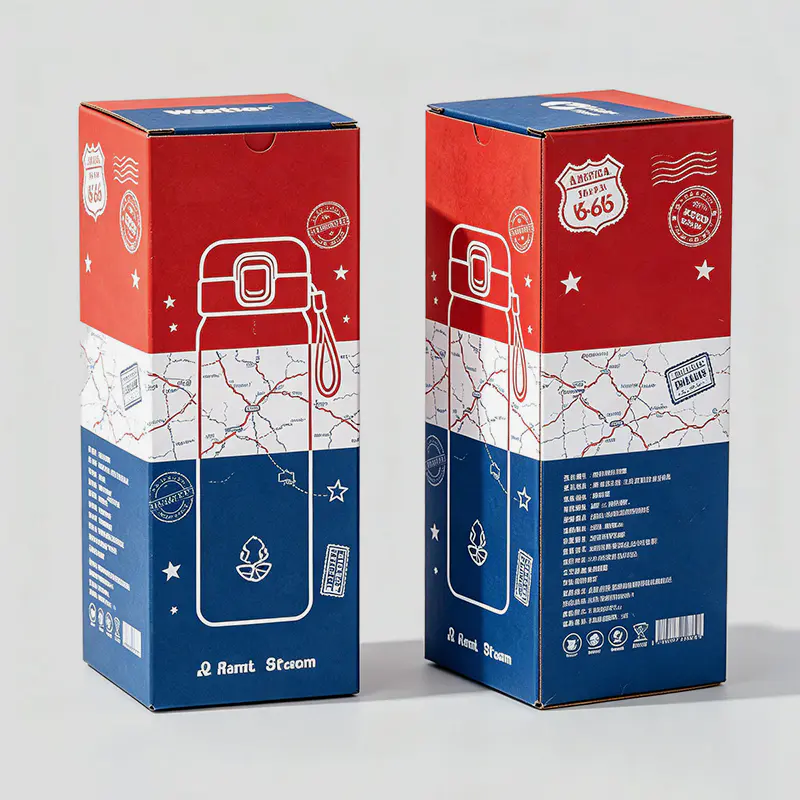
The route that OEM Cardboard Boxes travel decides how strong the board has to be. In a warehouse or a container, the bottom carton in a stack carries the weight of every carton above it, and the board is chosen to carry that load with a margin. Edge crush strength is the figure commonly used to rate Corrugated Cardboard Packaging for stacking.
Flute type shapes the result. E-flute is thin and gives a smooth surface for printing, which suits retail-facing cartons. B-flute is thicker, with more cushioning and better stacking performance, and combined flutes, EB among them, add strength through a double wall. Shundu's flip top box page lists E, B and EB flute options, and its category range also includes corrugated tuck end boxes, corrugated boxes with handle and printed corrugated mailer boxes, each carrying a different load. A retail carton and a shipping carton can share a size and still call for different board.
Structure And Artwork Share One Dieline
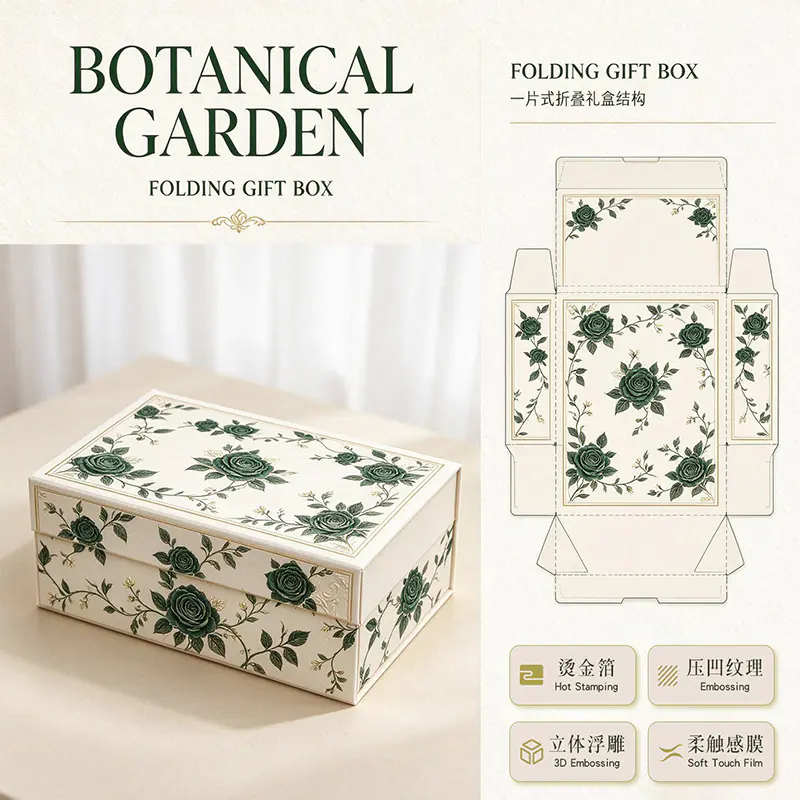
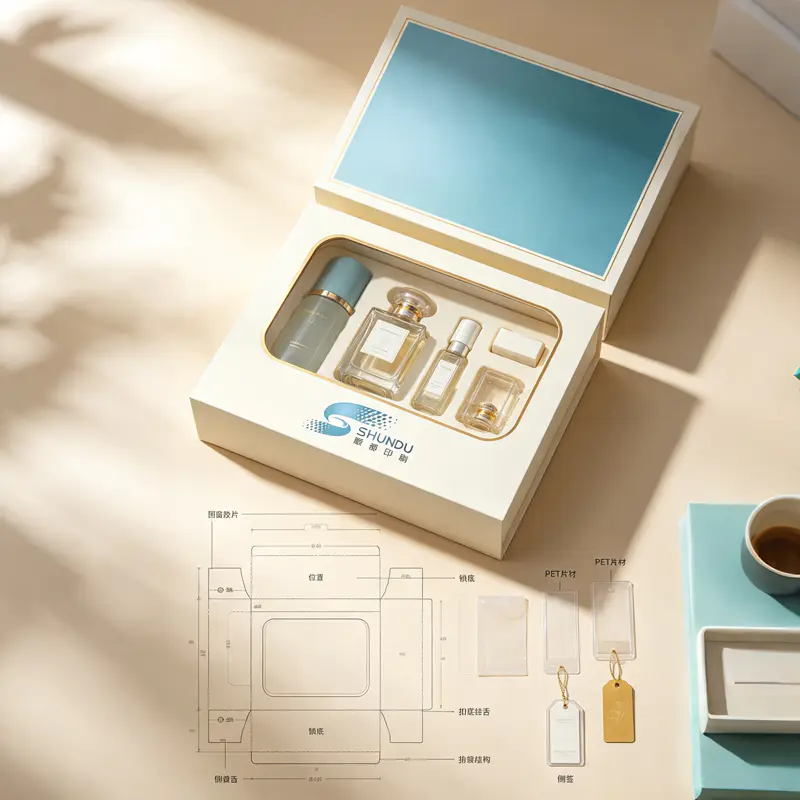
The dieline is the flat pattern of a carton, showing cut lines, fold lines, glue flaps and the position of every printed element. Structure and artwork are approved on the same flat sheet, which is why they are developed together. A logo placed across a fold, a barcode too close to a crease or a color panel that stops short of a flap all show up on the dieline before any board is printed.
For OEM Cardboard Boxes, logo, colors, artwork, barcode and product information are placed on that pattern, and the structure is confirmed in a physical sample. Samples are developed for structure, material and print approval before mass production, so changes happen on one sample rather than across a full run. The same dieline then carries into printing and post-press steps without being redrawn. Shanghai Shundu Printing, with 19 years in packaging printing, runs that path in-house from structural design and digital proofing through large-format printing and post-press processing, so OEM Cardboard Boxes keep the structure confirmed on the sample through printing and finishing.
Repeat Orders Start From Approved Figures
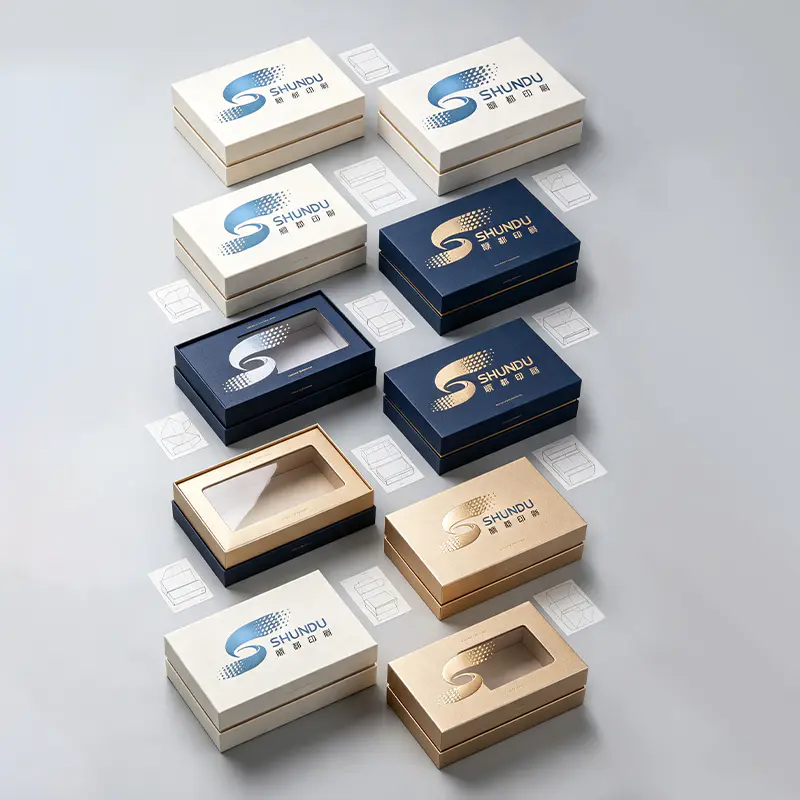
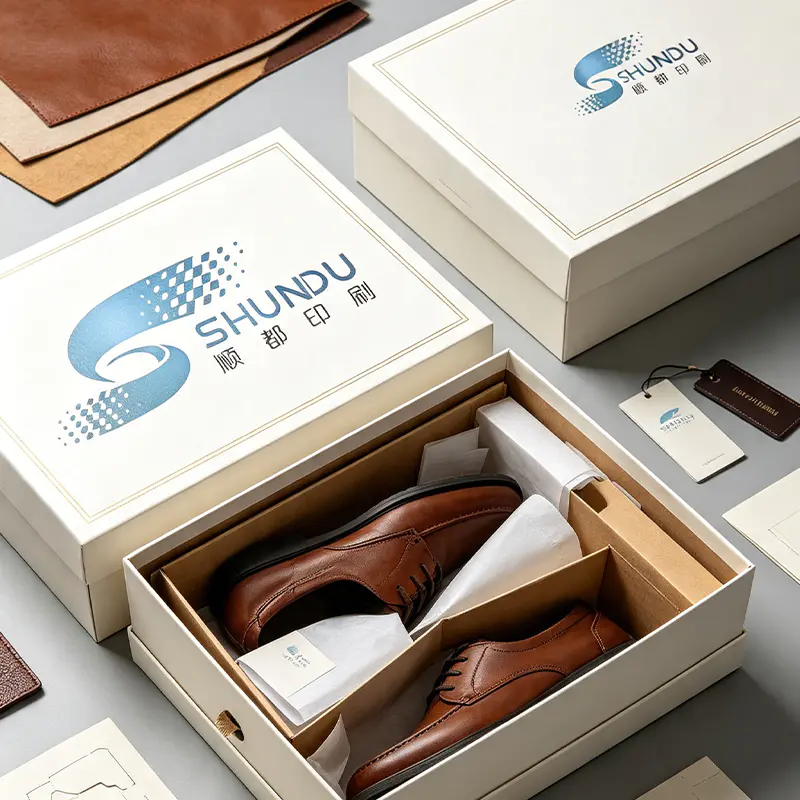
An approved carton leaves a record behind it: confirmed inner dimensions, board choice, dieline, color settings and a physical sample. A second order of OEM Cardboard Boxes starts from those figures instead of a blank brief, and a new product in the same line of OEM Cardboard Boxes can reuse the artwork files and color standards already approved. Shundu's Custom Paper Packaging Boxes category covers printed folding packaging boxes, beverage packaging boxes, food packaging boxes, corrugated tuck end boxes, corrugated boxes with handle and printed corrugated mailer boxes, so a retail carton, a mailer and a handled box can share one set of files.
Sizes, structures, materials, printing and finishing are customizable across that range, with kraft paper, paperboard and corrugated board available for food, cosmetics, apparel, gifts and consumer products. Each repeat order of OEM Cardboard Boxes carries its specifications forward, a Custom Paper Packaging Boxes order built this way keeps its size, board and print consistent, and the Corrugated Cardboard Packaging that follows matches the first run.
-
Contact
+86-021-69151306/69151309
+86-18017902949
E-mail
aimee@shunduprinting.com
shundu@163.com
Lucy@shunduprinting
-
Follow Us
Mobile QR Code
-
Address
No.12, Lane 88, Fengnian Road, Malu Town, Jiading District, Shanghai, China (Jingshun Industrial Park)
All Rights Reserved.
